
Designed for visible results, backed by clinical testing
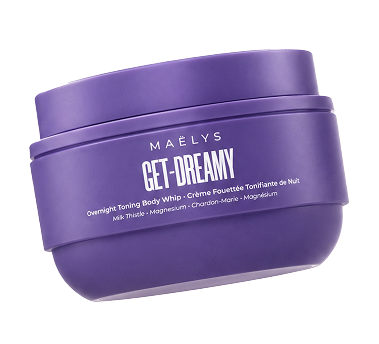
As part of our Biology-First Skin Response Science™ approach, our female-led product team develops each formula through a multi-step evaluation process: identifying gaps in existing solutions, researching ingredients, and determining the right delivery system for each formula before it reaches your shelf.
The next step is in vitro lab testing and in vivo clinical studies on real women to evaluate visible changes in how skin looks and feels.
This approach is deliberate. MAËLYS is designed to support skin through change - not to cover it up or minimize it. We don’t rely on a single ingredient or a single test. Our innovation is also shaped by our community, helping us create targeted solutions designed to support your skin as it changes.
Our testing approach
Participants are managed and recruited through independent labs. Participation is voluntary and anyone can withdraw at any point. Formulas are also tested prior to clinical testing for safety and skin sensitivity.
Before testing begins, participants skip all other skincare on the test area, so we know any results come only from our products.
Our measurements are done with gold-standard, cutting-edge equipment trusted by experts around the globe.
Each participant's results are measured against where they started, tracking improvements over time on the exact same area of skin.
Results are marked as significant when the data shows a statistically significant improvement. This means that the rate of success exceeds the rate of random variation, and experts can be sure that the product is proven to work as intended.
We use advanced 3D imaging systems that shine light patterns on the skin and capture its surface in incredible detail with precision cameras.
This creates a detailed “map” of the skin, helping us spot even the tiniest changes that might not be visible to the naked eye.
Our imaging tech is so precise, it filters out natural bumps and pores, so the only thing it measures is real results.
Along with high-tech measurements, we may also have expert clinicians visually assess the skin to track changes. Using a standardized scoring system, trained dermatologists or clinical graders rate specific skin features like the look of wrinkles, firmness, or smoothness, so we can clearly see improvements over time.
This approach is especially useful for spotting improvements that are visible to the eye, adding a human expert’s perspective to the overall assessment of the skin.
It’s not enough for instruments to detect results; our customers need to see and feel the difference, too. That’s why every clinical study includes a self-perception questionnaire.
At each stage, participants complete a simple survey to share their experience with the product, from how it feels on the skin to how effective they think it is. Responses are rated on a 4-point scale:
- 1 = Strongly disagree
- 2 = Somewhat disagree
- 3 = Somewhat agree
- 4 = Strongly agree
We focus on the percentage of participants who give a positive response (“Somewhat agree” or “Strongly agree”). This helps us ensure that the results aren't just measurable; they're real and meaningful to the people using the products.
How we evaluate on skin
Measuring changes in the skin's surface volume and shape helps us track concerns like the look of puffiness, sagging, dimples, folds, or cellulite. We're not just looking at how the skin feels, but seeing how it moves, lifts, and settles in appearance.
In order to see how skin lifts or tightens, we use 3D section analysis. This method tracks changes along a precise line, or “slice,” of the skin's surface.
At the start of the study, we pick a thin 1 mm-wide strip in the treatment area and mark three key points along it. At each follow-up, the system automatically analyzes the exact same section to spot any changes in the skin's contour.
This technique helps us measure subtle lifting, smoothing, or tightening in areas like the jawline, cheeks, or under the eyes.
Surface roughness looks at the tiny peaks and valleys on the skin that give it visible texture and feel. Measuring this lets us track improvements in multiple areas, including the look of wrinkles, cellulite, and overall skin smoothness.
We use volume analysis to measure changes in the skin's surface for stretch marks. The system compares the skin's 3D texture to a flat reference plane, identifying stretch marks as tiny “valleys” that sit below the corresponding skin. Once detected, it calculates a few key measurements to capture the size and depth of each mark, giving us a clear picture of how the look of the skin improves over time.
To track improvements in skin tone, we use a special imaging system that highlights even the tiniest differences in pigmentation. It captures detailed photos under gentle blue light, helping us see and measure changes in dark spots and uneven areas over time. This gives us a clear picture of how skin becomes more even, smooth, and radiant-looking with continued use.
Measurements are taken before and after to track appearance changes: a reduction in the size, number, or intensity of dark spots shows that the skin is more even-looking.
For improvements in firmness and elasticity, we use a tested dermatology device that gently lifts the skin and tracks how it bounces back. The less the skin moves, the firmer it is and the faster it returns to its original position, the more elastic it feels. This gives us a precise, real-time look at how skin reveals a stronger, more resilient appearance over time.
Together, these measurements show how firm, smooth, and bouncy the skin looks, and how much those qualities improve with regular product use.
To measure the skin's hydration, we use a specialized tool that gently scans the surface and detects moisture. The more hydrated the skin, the stronger the reading. It's a quick, non-invasive, and highly accurate way to show how well a product boosts skin hydration and keeps it feeling soft and healthy.
In order to understand how well a product strengthens the skin barrier, we measure how much moisture naturally escapes from the surface, known as transepidermal water loss (TEWL). When your barrier is strong, it locks hydration in; when it's weakened, moisture slips away. Our advanced sensors precisely track these changes, giving us a clear view of how effectively your skin retains moisture and stays feeling soft, smooth, and balanced.
Biology-First Skin Response Science™
See the testing in action - discover the science shaping every MAËLYS formula.
LEARN MORE ABOUT OUR SCIENCE >